There is something comforting about a plate of soft scrambled eggs on a slow morning. Stirring a spoonful of cottage cheese into the eggs is an old kitchen trick that turns an ordinary breakfast into something richer and fluffier. It is the dish I reach for on busy mornings, when I want something warm, filling, and ready before the coffee finishes brewing.
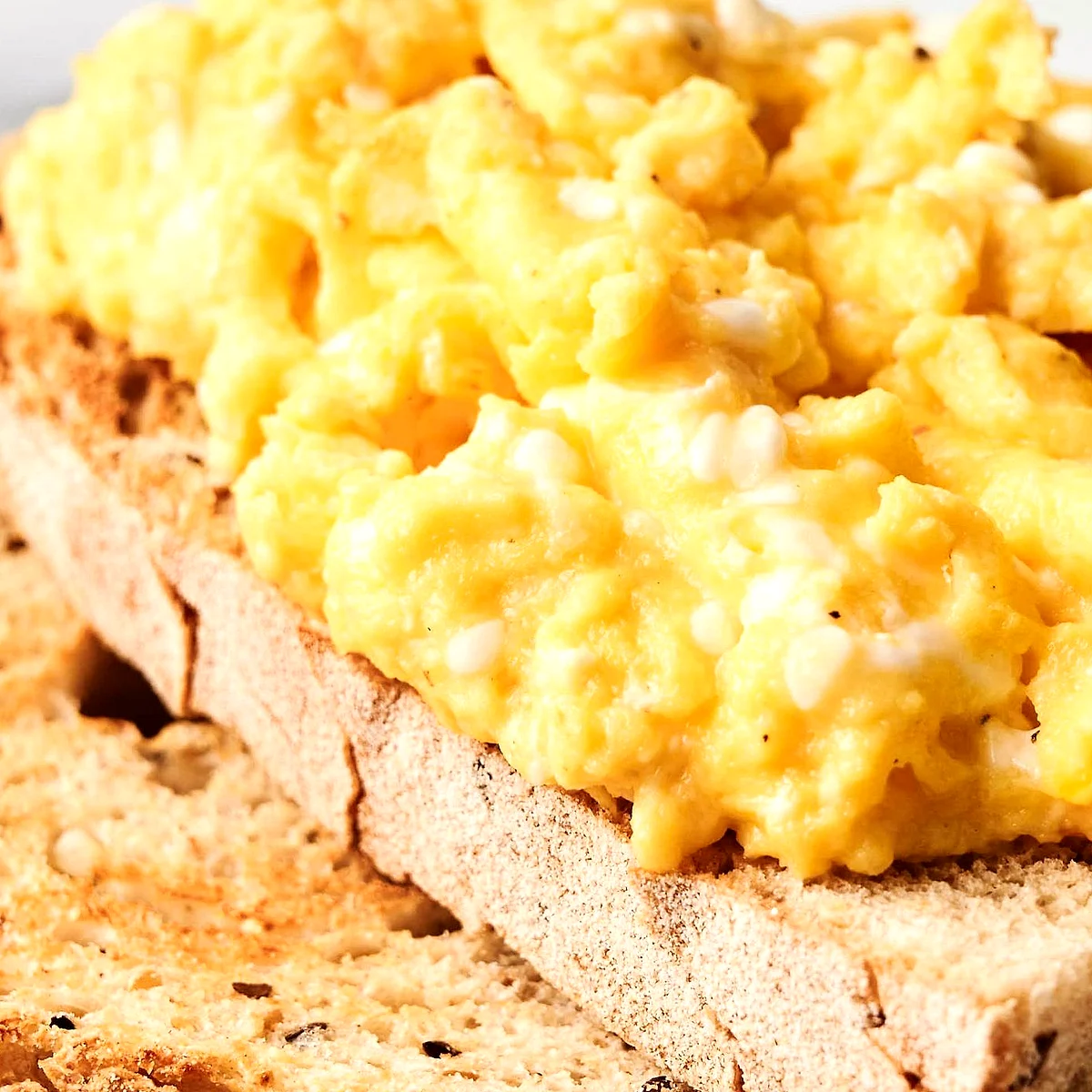
Cottage Cheese Scrambled Eggs
Cottage cheese scrambled eggs are soft, tender, and surprisingly creamy without any cream or milk. As the eggs cook, the curds of cottage cheese soften and melt slightly into the eggs, giving them a custardy texture that feels luxurious but stays light. The flavor is mild and savory, so the eggs taste like themselves with a little extra richness rather than like cheese. A pinch of salt and a few grinds of black pepper are all they need. Served warm on a slice of toast, they feel like a proper homestyle breakfast that keeps you full until lunch.
Ingredients & Substitutions
Eggs: Four large eggs give you a generous, fluffy batch for one or two people. Use fresh eggs at room temperature if you can, since they whisk up lighter and cook more evenly.
Cottage Cheese: Half a cup of 4% milk fat cottage cheese keeps the eggs creamy without making them greasy. If you prefer a lighter version, low-fat cottage cheese works well, though the eggs may be slightly less rich. Whole-milk ricotta can stand in if you cannot find cottage cheese, but it will be a little denser.
Salt and Pepper: Season lightly, since cottage cheese already adds some saltiness. Taste the curds first, then adjust. Freshly ground black pepper gives the best flavor.
Butter or Olive Oil: Half a tablespoon of butter gives a gentle, buttery flavor and helps prevent sticking. Olive oil is a good choice if you want a lighter finish or are cooking dairy-free, and it works just as well in a nonstick pan.
Can I Make Cottage Cheese Scrambled Eggs Ahead of Time?
These eggs are best eaten straight from the pan, while they are still soft and glossy. They can become firm and dry if left to sit, so it is better to cook them fresh. You can, however, prepare the mixture ahead by whisking the eggs, cottage cheese, and seasoning together in a bowl and keeping it covered in the refrigerator for up to a few hours. Give it a quick stir before it goes into the pan, and cook it over gentle heat so the curds stay tender.
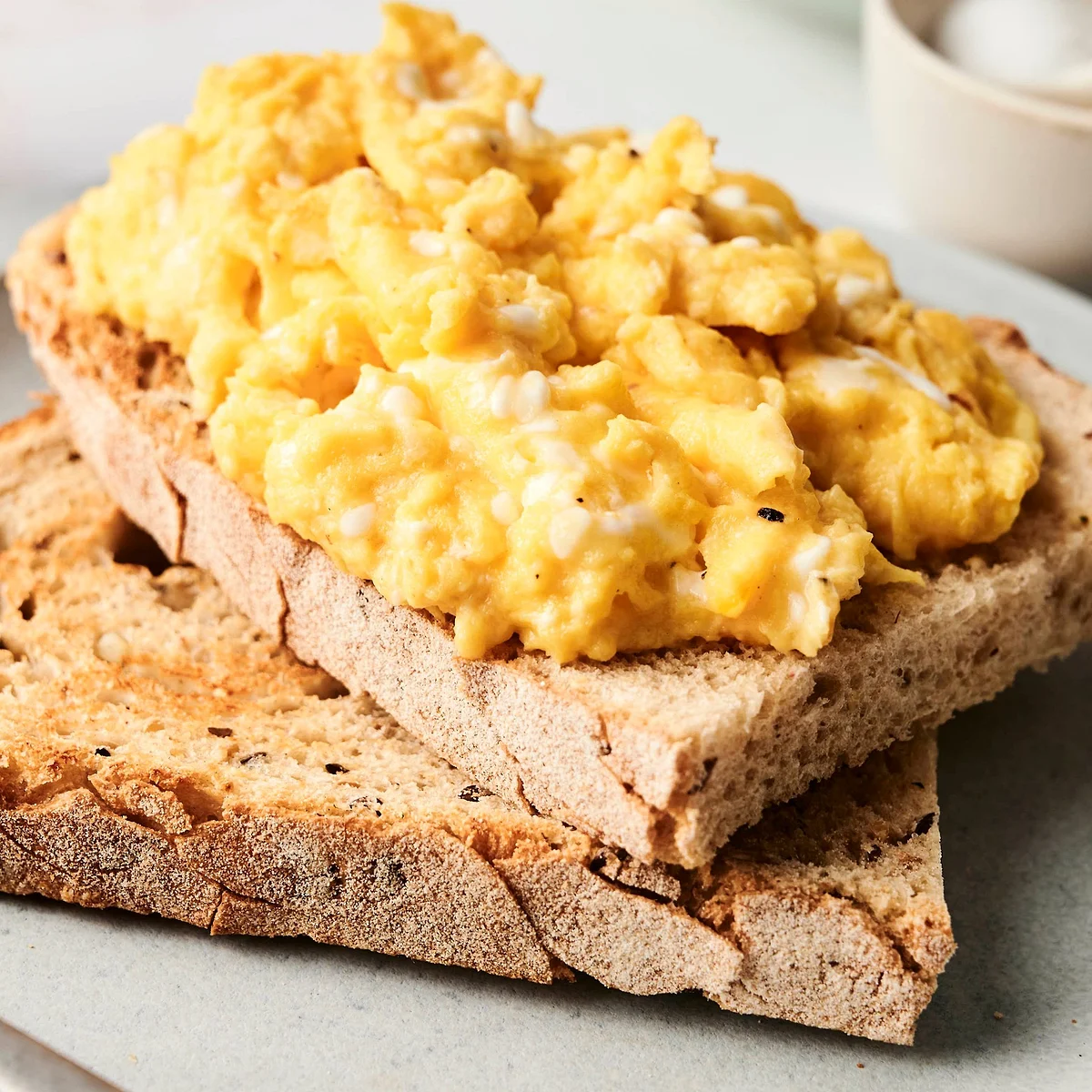
How to Store Leftover Cottage Cheese Scrambled Eggs
Leftover scrambled eggs should go into an airtight container as soon as they have cooled to room temperature, then into the refrigerator. They keep well for up to three days. Reheat them gently in a small pan over low heat with a teaspoon of water or a knob of butter, stirring often, so they do not turn rubbery. Microwaving works in a pinch, but use short bursts and stop while the eggs are still a little soft.
Can I Freeze Cottage Cheese Scrambled Eggs?
Freezing is possible, though the texture will be slightly softer when thawed.
- Cook the eggs until just set, slightly underdone, and let them cool completely.
- Portion them into a freezer-safe container or bag, pressing out extra air, and label with the date.
- Freeze for up to two months, then thaw overnight in the refrigerator and reheat gently in a pan over low heat.
 Recipe byAllison Reed
Cottage Cheese Scrambled Eggs
Ingredients
- 4 eggs
- ½ cup cottage cheese (4% milk fat)
- Salt and pepper, to taste
- ½ tbsp butter or olive oil, for the pan
Instructions
- Crack the eggs into a bowl and whisk until the yolks and whites are fully combined and no streaks remain.
- Add the cottage cheese to the eggs and whisk gently until the mixture is mostly smooth, leaving a few small curds.
- Season with a pinch of salt and a few grinds of black pepper, keeping in mind the cottage cheese adds some saltiness.
- Melt the butter or heat the olive oil in a non-stick skillet over medium-low heat until it is warm but not smoking.
- Pour in the egg mixture and let it sit for about 20 seconds, then gently drag a spatula across the bottom to form soft curds.
- Continue stirring slowly for 2 to 3 minutes, until the eggs are just set but still soft and glossy.
- Remove the pan from the heat while the eggs still look slightly wet, as they will finish cooking on the plate.
- Serve immediately while warm, with toast or fresh herbs if you like.
Notes
- Keep the heat low for the softest, creamiest texture.
- Low-fat cottage cheese can be used for a lighter result.