Cottage cheese eggs are the breakfast you didn’t know you needed. They turn out soft, creamy and surprisingly fluffy.

Best of all, they take about ten minutes and only a handful of ingredients.
Why you’ll love it
The cottage cheese melts into the egg as it cooks, so every bite feels rich and custardy without any heavy cream. It’s my go-to on busy mornings when I want something warm that actually keeps me full until lunch.
Egg whites bring in extra protein and keep the texture light, while the one whole egg adds richness and flavor. Season simply with salt and pepper and let the eggs shine.
What you’ll need
- Large egg – use it at room temperature for the smoothest result
- Egg whites – from a carton is easiest and measures neatly
- Lowfat cottage cheese – small or large curd both work; drain any excess liquid first
- Cooking spray – keeps the eggs from sticking without extra fat
- Salt and pepper – added at the end to taste
See the recipe card for quantities.
Helpful tips
- Don’t skip draining the cottage cheese if it looks watery, or your eggs will turn out soggy.
- Cook over medium-low heat. High heat makes the cottage cheese curds tough and rubbery.
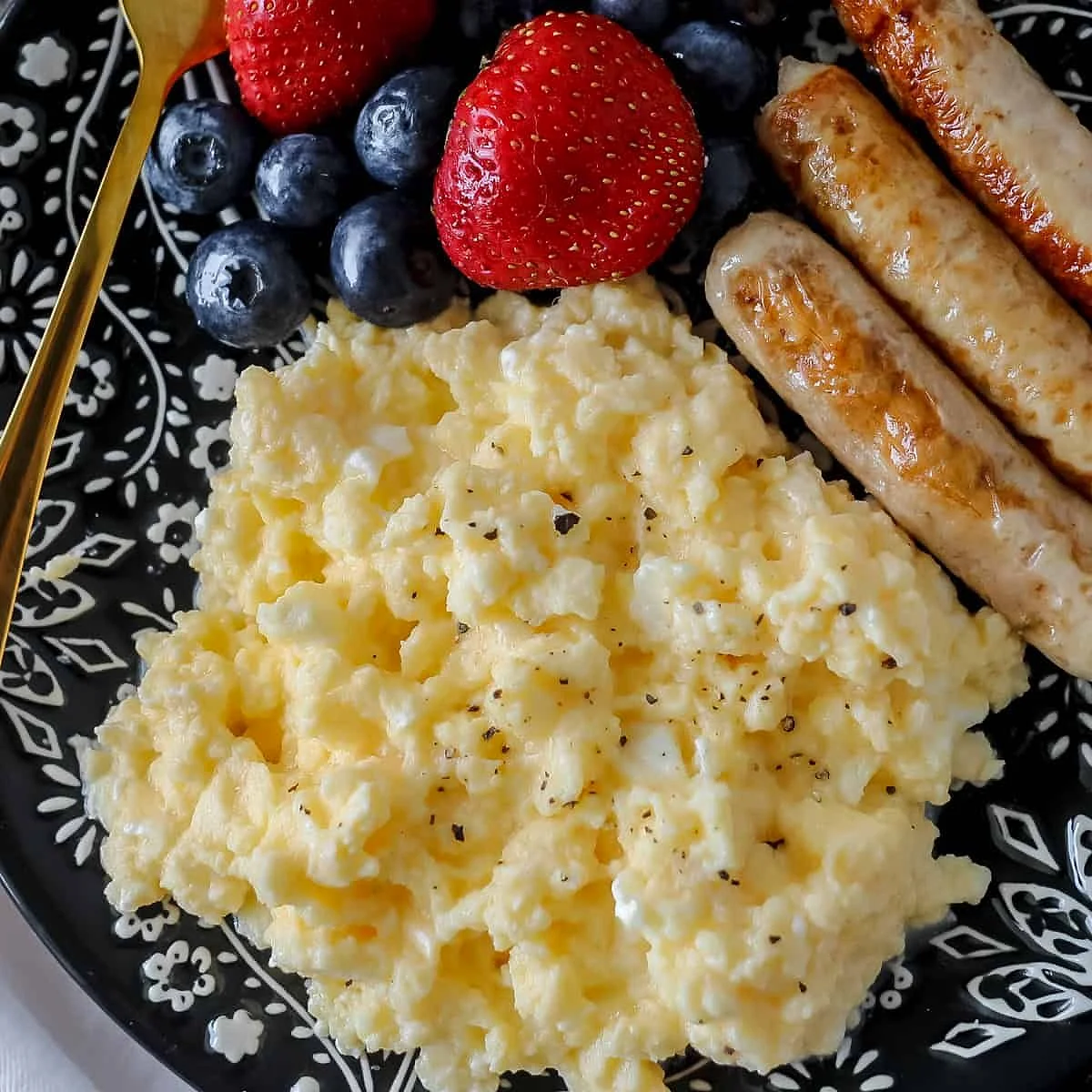
- Pull the pan off the heat while the eggs still look slightly glossy, since they keep cooking on the plate.
How to make cottage cheese eggs
Beat the whole egg and egg whites together in a bowl until smooth and evenly colored. Stir in the cottage cheese so it breaks into small pieces throughout the mixture.
Lightly coat a nonstick skillet with cooking spray and set it over medium-low heat. Pour in the egg mixture and let it sit for about 30 seconds until the edges start to set.
Gently push the eggs across the pan with a spatula, folding them as they form soft curds. Keep the movement slow so the eggs stay fluffy rather than dry.
When the eggs are just set but still moist, remove them from the heat. Season with salt and pepper and serve right away while warm.
Substitutions and variations
- Herbs: stir in chives, dill or parsley at the end for fresh flavor.
- Cheese: a sprinkle of sharp cheddar or feta adds a salty kick.
- Veggies: add a handful of spinach or sautéed mushrooms to the pan before the eggs.
What to serve with cottage cheese eggs
- Whole grain toast: sturdy enough to hold up to the soft eggs.
- Fresh fruit: berries or sliced tomatoes add brightness.
- Sautéed greens: a simple side that makes the meal feel complete.
Leftovers and storage
- Fridge: keep leftovers in an airtight container for up to 2 days.
- Freezing: cottage cheese eggs don’t freeze well, as the texture turns watery when thawed.
- Reheating: warm gently in a skillet with a splash of water over low heat, stirring often.
Give these cottage cheese eggs a try tomorrow morning and see how creamy a high-protein breakfast can be.
 Recipe byAllison Reed
Cottage Cheese Eggs
Ingredients
- 1 large egg, beaten (50g)
- 6 Tbsp egg whites (92g)
- 1/4 cup lowfat cottage cheese (57g)
- Cooking spray
- Salt and pepper to taste
Instructions
- Beat the large egg and egg whites together in a bowl until smooth.
- Stir in the lowfat cottage cheese, breaking up any large clumps.
- Lightly coat a nonstick skillet with cooking spray and warm it over medium-low heat.
- Pour in the egg mixture and let it sit for about 30 seconds until the edges begin to set.
- Gently fold and push the eggs with a spatula for 2 to 3 minutes until soft curds form and the eggs are just set but still moist.
- Remove from the heat, season with salt and pepper to taste, and serve immediately.
Notes
- Drain the cottage cheese if it looks watery before adding it.
- Keep the heat low to prevent rubbery curds.
- Leftovers keep in the fridge for up to 2 days.